


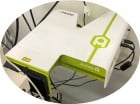
The PRIMO Micropatterning System (Alvéole Lab) is a UV-based, maskless photopatterning platform designed for the fabrication of custom in vitro cellular microenvironments. The system enables precise spatial control of biochemical and physical cues on standard cell culture substrates, supporting advanced studies in cell biology, mechanobiology, and tissue engineering.
The system utilises a digital micromirror device (DMD) to project user-defined UV light patterns (typically 375 nm) through the microscope objective, enabling contactless and highly flexible patterning without the need for physical masks. This approach allows rapid generation of complex and reproducible micropatterns with micrometre-scale resolution (~1–2 µm).
PRIMO supports multiple photopatterning modalities, including protein micropatterning, hydrogel photopolymerisation, and microfabrication. These capabilities enable the creation of defined adhesive patterns, 3D hydrogel structures, and microengineered environments for controlling cell organisation, shape, and function.
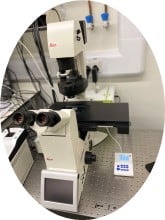
The system is integrated with an epifluorescence microscope and motorised stage, allowing precise alignment, pattern positioning, and compatibility with standard imaging workflows. It is compatible with a wide range of substrates, including glass, hydrogels, and microfluidic devices, facilitating versatile experimental design.
 Key Capabilities,
- UV-based maskless photopatterning using digital micromirror device (DMD)
- Generation of high-resolution protein micropatterns (~1–2 µm)
- Hydrogel photopolymerisation and 3D microstructure fabrication
- Precise control of cell adhesion, shape, and spatial organisation
- Rapid and reproducible pattern generation without physical masks
- Compatibility with standard cell culture substrates and microfluidic systems
- Integration with fluorescence microscopy for alignment and imaging
Typical Applications,
The system supports a wide range of applications, including:
- Engineering controlled cellular microenvironments for mechanobiology studies
• Regulation of cell shape, adhesion, and cytoskeletal organisation
• Single-cell patterning and isolation under defined conditions
• 2D and 3D cell culture models, including hydrogel-based systems
• Tissue engineering and organ-on-chip model development
• Cell migration, polarity, and cell-cell interaction studies
• Microfabrication of structures for biomaterials and microfluidic devices